New Zealand · Practical guide
What details to exchange after a car accident in New Zealand
A clear record helps you explain the event when you contact your insurer. This guide covers shared information and document review; it does not file a claim or notify the authorities.
Record known facts and check differences before signing. Immediate danger or injury calls for help before documentation.
1. Record the place and time
Use the actual date, time and location of the accident. Check the country, street and town before continuing: the event location determines the document layout. Only add information about injuries or witnesses that you know.
2. Keep vehicle A and B separate
Agree which vehicle is A and which is B and use that assignment throughout. Record vehicle, driver and policyholder details separately; these may be different people. Check the policy number against the insurance document rather than guessing.
3. Describe the circumstances
Complete the circumstances for each vehicle. Describe what you observed, the movements and directions. Avoid conclusions about fault. Use a sketch to clarify positions, keeping A and B consistent with the rest of the record.
4. Review both sides
The other person can join through an invitation link or QR code. You can also share one phone. Read both sides back and flag mistakes during review. Discuss differences before either person signs.
5. Sign the checked version
Check names, plates, insurance details, location, circumstances and sketch again. Each participant should review their own information. A signature should not be used to skip an unresolved difference about the facts.
6. Keep the PDF
Download the PDF and check that it is readable. Save your own copy and ask your insurer which supporting documents and submission channel they need. The tool does not automatically file a claim or send the record to an insurer.
Driver, vehicle and insurance details
Collect names and contact information, vehicle registration and relevant insurance details. Keep the driver separate from the vehicle owner or policyholder where they differ. AA New Zealand’s guidance explains the follow-up with an insurer; use your own insurer’s instructions for your claim.
The accident location matters
Record the actual date, time and location. For a New Zealand accident, the tool produces an A4 exchange-of-details record. Choosing English on the website does not determine the accident country. Check both the location and the PDF before relying on it for your records.
A shared record before follow-up
Compare both sides, the description and the sketch. Keep vehicle A and B consistent throughout. Save the PDF and any separate supporting evidence, then follow the relevant insurer and authority procedures. Downloading this record does not complete those steps or decide liability.
DEMO
Read the example
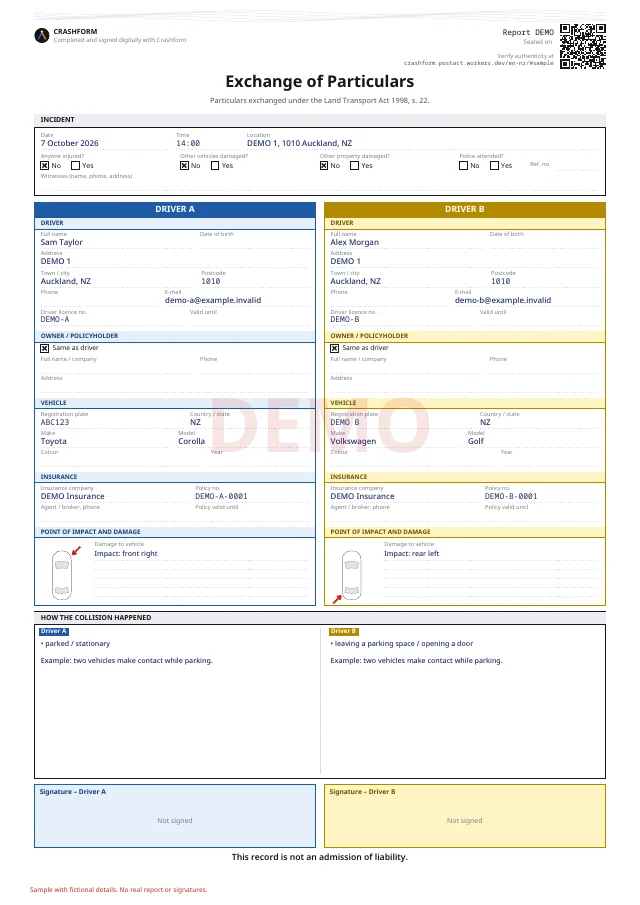
In the fictional example, two vehicles make contact while parking. Find A and B in the PDF. Compare names, plates, date and location with the description. Then check whether the sketch and selected circumstances tell a consistent story. The DEMO document contains no real signatures and is not intended for submission.
View sample PDF ↗Check before signing
- Registration plate and vehicle details
- Insurance certificate or policy number
- Driving licence and contact details
- Date, time and location of the accident
- Description, sketch and any witnesses
Preparing a document is separate from filing a claim. Crashform does not decide liability or guarantee acceptance by every insurer.
Sources and next steps
Local sources consulted on 8 October 2026. This guide describes our tool; it is not an insurer review or endorsement. Follow current instructions from your insurer and the relevant authorities.